

What Tornado Damage Is NOT Covered by Homeowners Insurance?
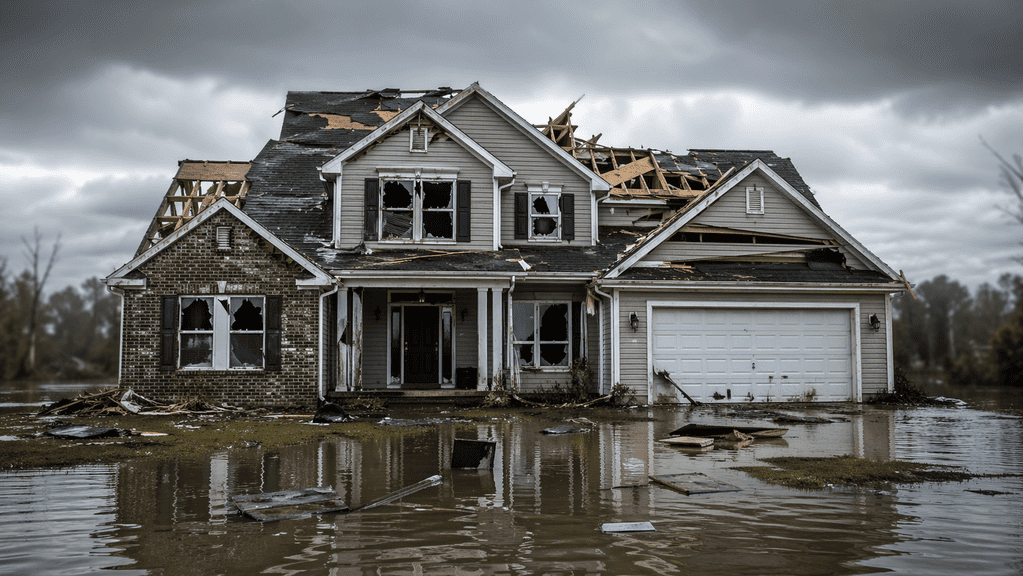
Most homeowners assume their policy will pay for tornado damage. Many discover otherwise — not because their policy has no tornado coverage, but because a specific exclusion, valuation method, or procedural clause reduced or eliminated the payout they expected. If you’re reading this after receiving a settlement number that didn’t match the damage you saw, you’re not alone. This article explains every major category of tornado damage that standard homeowners insurance excludes, how each exclusion is applied in practice, and where insurers sometimes apply exclusions beyond their legitimate scope. Understanding these distinctions is useful before a storm — and essential after one, especially if your insurer has denied or reduced your claim.
Is all tornado damage automatically covered by a standard homeowners policy?
Not automatically, and not in full. A standard HO-3 policy covers wind damage unless wind is specifically excluded, and in most of the country, tornadoes fall under the windstorm peril. But “covered” doesn’t mean “fully paid.” What limits actual recovery are the exclusions and valuation methods applied after the loss. For the full picture of what standard policies do cover, see what homeowners insurance pays for after a tornado.
Knowing what a policy excludes is only one part of evaluating a loss. Homeowners should also understand what homeowners insurance covers after tornado damage, particularly when wind and water contribute to the same loss. Water damage can be especially complicated, so we also explain how homeowners insurance handles tornado-related flooding. If you’re preparing a claim, properly documenting storm and tornado damage can help establish the condition of the property and extent of the loss.
Does homeowners insurance cover flooding caused by a tornado?
No. Flooding from rising water is excluded from standard homeowners insurance even when a tornado directly caused or contributed to it. Coverage requires a separate flood insurance policy — typically through the NFIP or a private carrier.
The distinction that determines coverage is how the water entered: rain that comes through a wind-created opening (a torn-off roof section, a shattered window) is covered wind-driven rain. Water that rises from the ground, backs up through storm drains, or flows in at street level is classified as flood damage and excluded — regardless of what storm produced it. For a detailed breakdown of how this distinction plays out in Florida claims, see how homeowners insurance handles tornado-related flooding.
What is the anti-concurrent causation (ACC) clause — and how can it eliminate my entire claim?
The ACC clause states that if a covered peril (wind) and an excluded peril (flood) both contribute to the same loss, the insurer may deny the entire claim — including the wind-caused portion. Most ACC denials are vulnerable to challenge if the damage from each peril can be separated through engineering analysis. The Florida OIR’s 2025 Yaworsky Directive further restricts this tactic, requiring insurers to evaluate wind and flood components separately rather than using the ACC clause as a blanket denial mechanism.
Can an insurer deny or reduce my claim because my roof was old before the tornado?
Yes — and this is one of the most common tactics in tornado claim disputes. During inspection, adjusters look for pre-existing deterioration: granule loss, minor cracks, soft spots, wood rot. When found, they may attribute part of the damage to maintenance issues rather than to the storm, reducing the payout accordingly. Understanding how and when a roof damage insurance claim can be denied — and the specific tactics used — is essential reading for any homeowner facing this argument.
The defense is documentation. Dated photographs and contractor invoices establish that the structure was functional before the storm. Knowing how to systematically document all storm damage before and after the event is the most effective defense against pre-existing condition denials.
What other common exclusions reduce tornado payouts in Florida?
- Sewer backup is excluded from both standard homeowners and flood insurance policies. A separate endorsement is needed to cover wastewater that backs up through floor drains or toilets during tornado-driven rainfall.
- Cosmetic damage exclusions eliminate coverage for damage that affects appearance but not function — dented siding, scuffed shingles — even when the tornado directly caused it.
- Screen enclosures and pool cages are frequently excluded or severely capped. Citizens Property Insurance often excludes aluminum-framed screen structures entirely; standard private HO-3 policies often cap coverage at $10,000. A structure costing $30,000–$50,000 to rebuild may receive minimal recovery.
- Personal property sub-limits cap recovery on jewelry ($1,500), cash ($200–$500), art and collectibles ($2,500), and business equipment ($2,500) — well below replacement value in most cases.
- Ordinance or Law gaps leave homeowners responsible for code-compliance upgrade costs during repairs. Florida Statute §627.7011 requires insurers to offer this coverage at 25% or 50% of the dwelling limit, but it must be purchased separately.
What filing deadlines apply to Florida tornado claims?
Florida requires an initial claim notice within one year of the date of loss and supplemental claims within 18 months. The statute of limitations for a breach of contract lawsuit is five years from the date of the breach — typically the date of denial or underpayment. Missing the one-year initial notice deadline forfeits the claim entirely. Following the correct filing procedure from the moment the tornado strikes protects every deadline in the process/
Think Your Tornado Claim Was Wrongly Denied or Reduced? Kennon Law Can Help.
Many of the exclusions applied to tornado claims are legitimate — but many others are applied beyond their proper scope. Kennon Law’s tornado insurance claim attorneys distinguish between genuine policy gaps and bad-faith denials, and they fight for the full payout Florida law entitles you to. Contact Kennon Law today for a free consultation.