

Slip and Fall Accident Lawyer in Oviedo, Florida
Slip and fall cases come with a hard truth: stores and property owners often blame you first. You’ll hear it immediately—“You should have watched where you were going.” Meanwhile, the puddle gets mopped up, the debris disappears, and the surveillance video “can’t be found.”
If you were hurt on someone else’s property, you need more than sympathy—you need proof. A Oviedo Slip and Fall Accident Lawyer helps you move fast, preserve evidence, and build a premises liability case that shows the dangerous condition was preventable—and the property owner was negligent.
We know how to find the evidence that proves the property owner was negligent. That means video, maintenance logs, incident reports, witness statements, and the details that establish duty of care, notice, and liability.
Proving Fault: The Key to Winning Florida Slip and Fall Cases
Slip and fall claims aren’t just about getting injured—they’re about proving why it happened and what the property owner knew (or should have known). This is where a Oviedo Slip and Fall Accident Lawyer can make the difference between a denied claim and a fair settlement.
Understanding Florida Statute 768.0755
In Florida, if you slip and fall on a transitory foreign substance in a business establishment (like a spill in a supermarket), you must prove the business had actual or constructive knowledge of the dangerous condition and failed to address it.
In other words: it’s not enough that you fell. The case often comes down to whether the spill, puddle, debris, or obstruction was there long enough that a reasonable business should have discovered and cleaned it—or whether there was a recurring hazard they ignored.
How We Prove “Constructive Knowledge”
Insurance companies rarely “give” you constructive notice. We build it with evidence, including:
- Incident report details and witness statements that verify the hazard existed
- Surveillance video showing how long a spill sat there (and who walked past it)
- Maintenance logs and cleaning schedules (or the lack of them)
- Employee testimony and internal policies (who inspected, when, and how)
- Photos of the entryway, walkway, staircase, mat/carpeting, lighting, and handrails
Where Slip and Fall Accidents Happen Most Often
Slip, trip, and fall injuries can occur almost anywhere the public is invited—or where a property owner, landlord, tenant, or manager has a duty to maintain safe conditions. This page is meant as a general premises liability guide you can apply to any location.
Common settings include:
- Grocery stores and supermarkets (spills, leaking coolers, dropped food, wet floor sign disputes)
- Retail stores and shopping centers (cluttered aisles, mats, torn carpeting, obstruction hazards)
- Restaurants and bars (slick entryways, spilled drinks, dim lighting)
- Office buildings and medical facilities (wet floors, staircases, elevator/entryway hazards)
- Apartment complexes and residential communities (broken handrails, cracked sidewalks, poor lighting)
- Parking lots, walkways, and public-facing sidewalks (uneven pavement, debris, drainage issues)
Wherever the fall happened, the legal focus stays the same: duty of care, notice (actual or constructive), and whether the dangerous condition was foreseeable and preventable.
Common Hazards That Cause Slip and Fall Injuries
“Transitory Foreign Substances” (Spills)
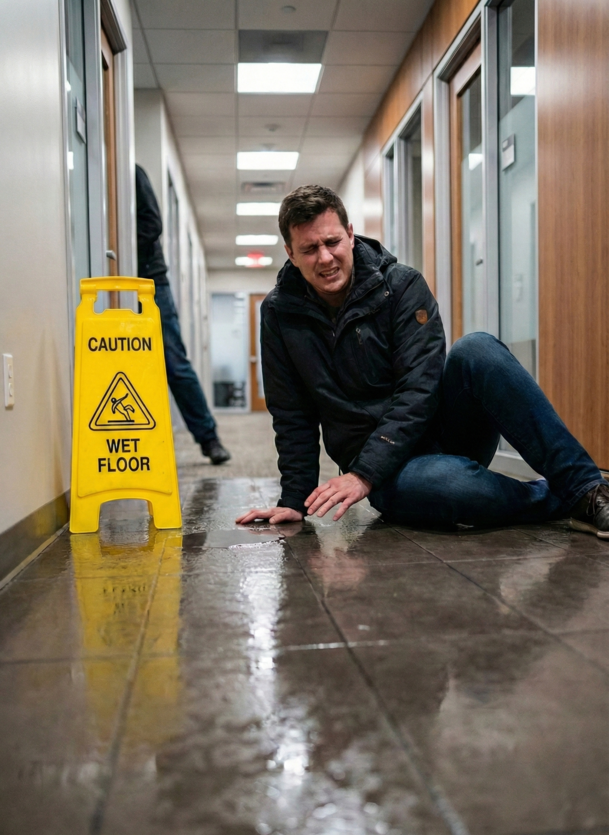
Leaking coolers, dropped produce, oily residue, or tracked-in rainwater in an entryway can cause a slippery fall in seconds—especially when there’s no wet floor sign, the sign is hidden, or the area is unreasonably hazardous.
Uneven Pavement and Cracked Sidewalks
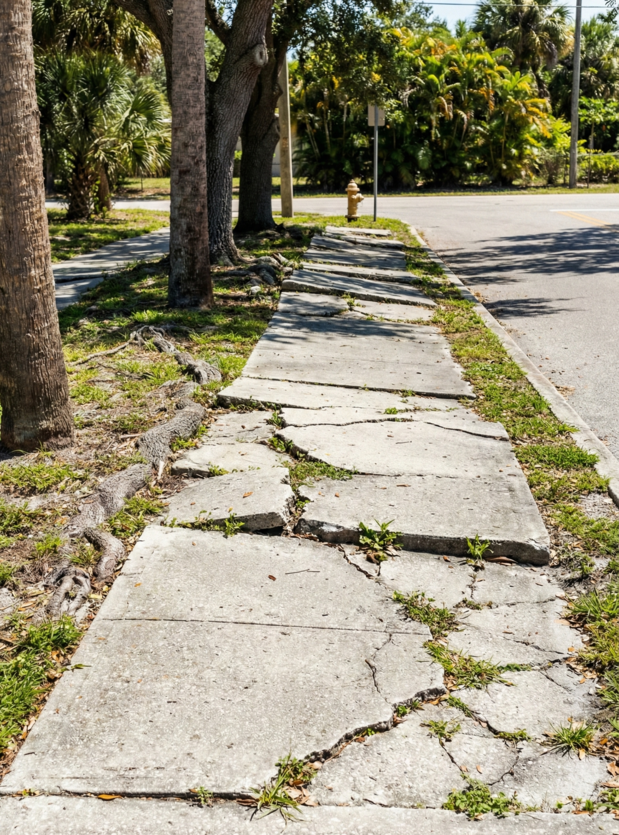
Trip hazards in parking lots, walkways, and sidewalks—cracked concrete, broken curbs, loose mats, torn carpeting, or uneven pavement—can cause fractures, herniated discs, and head trauma. These cases often turn on inspection history, repair records, and whether the danger was foreseeable and preventable.
Inadequate Lighting
Dim or poorly lit staircases, hallways, and sidewalks can make a step, curb, or obstruction effectively invisible. When a property owner overlooks burnt-out lighting or fails to maintain safe visibility, serious falls happen fast.
Steps to Protect Your Claim After a Fall
To protect your claim after a fall, before contacting a Oviedo personal injury lawyer, follow these steps:
- Report the accident immediately: Notify a manager and request an incident report (avoid signing anything without legal advice if possible).
- Take photos right away: Spills and debris get cleaned in minutes. You need proof the puddle/spill existed.
- Get witness information: Names and phone numbers of anyone who saw the hazard or the fall.
- Seek medical care: Document injuries and link them to the fall (fracture, hip injury, TBI, herniated disc).
- Preserve evidence: Don’t wash the clothes/shoes you wore—residue can help verify the substance involved.
Florida Premises Liability Laws (2026 Update)
The 2-Year Statute of Limitations
Florida now generally provides two years to file an action founded on negligence.
That deadline can sneak up quickly—and in slip and fall cases, the bigger danger is evidence disappearing long before the statute runs.
The “Open and Obvious” Defense
Property owners and insurance companies often argue the hazard was “open and obvious,” meaning you should have seen and avoided it. We fight back by showing why the danger was still unreasonable—poor lighting, a hidden spill, a crowded aisle, an unavoidable path, or a condition that blended into the floor surface.
Comparative Negligence
Even if you were partially at fault (for example, looking at your phone), you may still recover damages as long as you’re not found more than 50% responsible under Florida’s modified comparative negligence framework.
That’s why evidence matters—because fault allocation can decide whether you recover anything at all.
Contact Our Oviedo Slip and Fall Injury Attorneys Today
Kennon Law attorneys can see why your claim was denied and help you file an appeal. If the insurance company is acting in bad faith and denying a legitimate, well-documented claim, we may also be able to file a bad-faith insurance lawsuit on your behalf. Contact us today for more information.
Frequently Asked Questions
It can make the case harder—but not impossible. We look at whether the sign was visible, properly placed, and whether the hazard extended beyond the warning. If a whole area was slick, obstructed, or unreasonably dangerous despite the sign, liability may still exist.
Sometimes, but such cases can involve sovereign immunity rules and statutory limits. Florida’s waiver statute references limits such as $200,000 per person / $300,000 per incident absent additional legislative action (often called a “claims bill”).
We assess jurisdiction, notice requirements, and who actually controlled the sidewalk or walkway (city vs. adjacent property owner) before recommending a strategy.
It depends on liability and damages: medical expenses, future care, lost wages, pain and suffering, and whether injuries are permanent (fracture, hip replacement, TBI, spinal injury). We evaluate medical records, treatment needs, and the strength of evidence proving notice and negligence.
Testimonials
Awards & Honors


Contact us now
Have questions or need legal assistance? Contact Kennon Law today for expert guidance on personal injury and insurance claims.

