

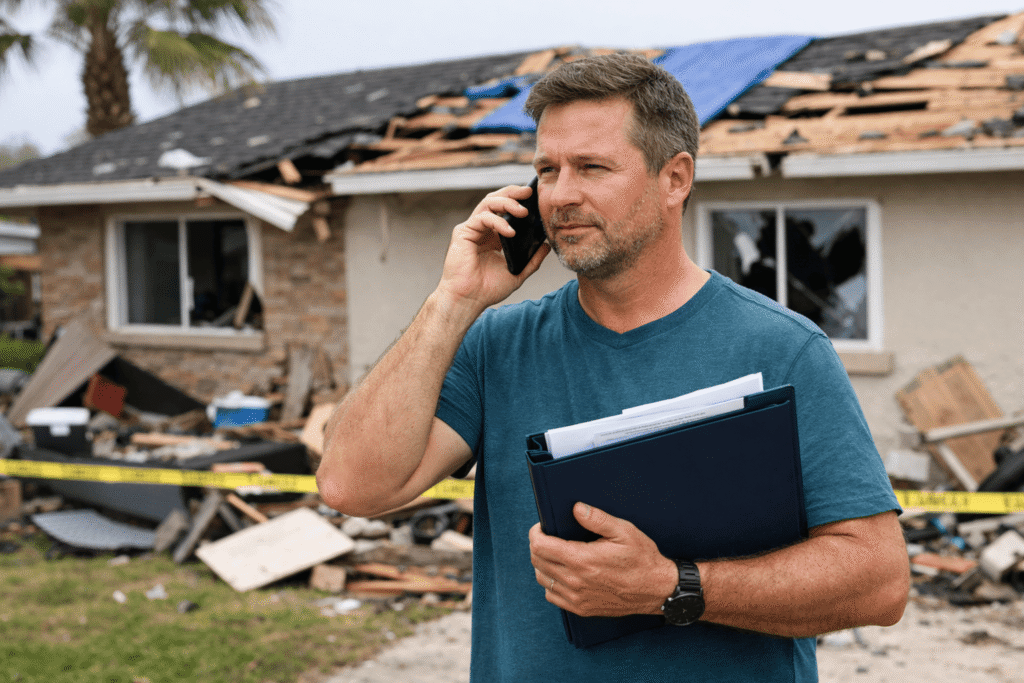
Preparing and submitting a tornado insurance claim requires a thorough analysis of your insurance policy to ensure the structural integrity of your Orlando home is fully restored after a catastrophe. Property owners must document damage with photographic evidence and submit an itemized inventory list to their insurance provider to avoid underpaid claims and secure a fair settlement.
In Summary
To ensure you receive a fair settlement from your insurance company and avoid underpaid claims, follow this quick-reference guide:
- Prioritize Safety First: Evacuate if the structural integrity is compromised and notify insurer immediately of hazards like downed power lines or gas leaks.
- Mitigate Further Damage: Take reasonable steps to secure the entire property, such as using reputable contractors for emergency repairs and tarping broken windows.
- Document Everything Thoroughly: Capture photographic evidence from multiple angles and maintain an itemized inventory list of all damaged items and living expenses.
- Review Your Policy Carefully: Identify your deductible, coverage limits, and whether your insurance policy pays replacement cost or actual cash value.
- Prepare for the Adjuster: Be present during the insurance adjuster’s visit to present your own independent estimates and ensure the full extent of the storm damage is recorded.
- Avoid Common Pitfalls: Do not sign a final settlement or release until you are certain it covers all rebuilding costs; always seek a second opinion if an offer feels disputed or catastrophic.
- Seek Expert Legal Advice: If your property claim is denied or you face bad faith tactics, a free consultation can help you negotiate settlement terms.
Kennon Law can help you with issues regarding tornado insurance claims, providing the comprehensive legal support needed to navigate the claims process in Orlando.
Before Filing an Insurance Claim
To prepare before filing an insurance claim, a property owner must gather essential documentation to prove the full extent of the loss. You should locate your homeowners insurance policy to review the specific policy language, coverage limits, and the applicable deductible that will be subtracted from your final settlement.
Identifying pre-existing conditions is crucial to avoid underpaid claims. If you have older photos of the property’s structural integrity, keep them ready to compare against the current storm damage. Having your agent’s contact info and policy number organized will help you avoid costly mistakes during the initial reporting phase.
Immediate Safety and Preventing Further Damage
Ensuring immediate safety and preventing further damage is the absolute priority following a catastrophic tornado. If the structural integrity of your home is compromised, evacuate the entire property immediately and do not attempt to enter until a professional confirms it is habitable and safe.
Property owners should shut off utilities if instructed, but only if it is safe to do so. Navigating an uninhabitable building requires extreme caution; avoid contact with standing water and do not touch electrical components. Taking these reasonable steps protects your well-being while fulfilling your contractual duty to mitigate loss under your insurance policy.
Report Downed Power Lines and Other Hazards
The process to report downed power lines and other hazards involves contacting both your local utility company and emergency services. Tornadoes often leave behind severe weather hazards like gas leaks or exposed wiring; you must notify the insurer and local authorities of these public-facing dangers to ensure the site is secured.
Contact Your Insurance Company Promptly
You should contact your insurance company promptly—ideally within 24 hours of the storm—to begin the tornado insurance claim process. When you reach out to your insurance provider, request a specific claim number and ask for their preferred methods for submitting supporting evidence like digital photos and inventory lists.
Early communication makes all the difference in avoiding delays. Ask your agent about “Additional Living Expenses” (ALE) coverage if your home is currently uninhabitable. Documenting the date and time of this initial call, along with the name of the representative, creates a vital record for your comprehensive claim file.
Documenting Damage Caused by the Tornado
Documenting damage caused by the tornado requires a thorough, itemized approach to capture the full extent of the property damage. You must use a camera to take high-resolution, timestamped photos and videos of all damaged areas, including wind-blown debris, structural cracks, and water intrusion from broken windows.
Do not discard damaged items until the insurance adjuster has performed an inspection report. Create a detailed inventory list that includes the age, brand, and estimated replacement cost of every item lost. This additional documentation provides the necessary proof of loss to justify a fair payout and counteract efforts to minimize payouts.
Filing a Tornado Damage Claim: Step-by-Step
To ensure a successful claim, act fast by contacting your insurer immediately after the catastrophe. Florida law requires policyholders to mitigate further damage, so you should perform temporary repairs, such as covering broken windows or tarping a roof, while saving every receipt for these emergency expenses.
- Step 1: Notify your insurance company to obtain a claim number.
- Step 2: Document damage using multiple angles and timestamped photos.
- Step 3: Compile an itemized inventory of damaged items with replacement cost estimates.
- Step 4: Submit a formal proof of loss statement within the policy’s time limits.
- Step 5: Schedule the insurance adjuster’s visit and provide them with your independent estimates.
Preparing for the Insurance Adjuster’s Visit
When preparing for the insurance adjuster’s visit, you should aim to be present on-site to walk them through the entire property. Having your own independent estimates from licensed contractors ready to present can help ensure the adjuster’s assessment reflects the actual rebuilding costs rather than a depreciated actual cash value.
- Point out hidden damage: Highlight structural issues that might be overlooked.
- Provide lists: Hand over your itemized inventory of personal property.
- Take notes: Record what the adjuster says and what areas they inspect.
- Compare photos: Show them the “before” photos of the property to prove the impact.
Understand Your Homeowner’s Insurance Policy Coverage
To understand your homeowners insurance policy coverage, you must carefully review the policy language for windstorm coverage and specific exclusions. Many homeowners in “Tornado Alley” or Florida have separate deductibles for wind damage, which can be significantly higher than a standard property claim deductible.
Identify whether your policy covers “Replacement Cost” or “Actual Cash Value.” The former pays to replace items at today’s prices, while the latter only pays for the depreciated value. Knowing these coverage limits helps you estimate the final settlement and determine if you need to appeal a low settlement offer.
Mitigate Further Damage After the Storm
You must mitigate further damage after the storm by taking reasonable steps to protect your property from the elements. This includes hiring reputable contractors for emergency repairs like installing tarps on the roof or boarding up windows to prevent additional water or flood damage from entering the home.
Keep all invoices for these urgent services, as they are typically covered under the “Reasonable Repairs” section of an insurance policy. Failure to secure the property could lead to a partial loss being treated as non-recoverable if the insurer argues that the subsequent damage was preventable by the property owner.
Common Pitfalls When Filing Tornado Insurance Claims
Common pitfalls when filing tornado insurance claims include accepting the first settlement offer too quickly and failing to record conversations with the insurer. Many homeowners make the costly mistake of signing releases before they know the full extent of the structural damage, which can prevent them from seeking more money later.
Avoid discarding damaged property or starting permanent rebuilding costs before the adjuster’s inspection. Another significant error is failing to distinguish between wind damage and flood damage, as these often require different policies. Always seek a second opinion if the initial offer feels insufficient to cover your total loss.
If Your Claim Is Denied or Underpaid
If your claim is denied or underpaid, your first step is to request a written explanation from the insurance company detailing the policy language they used for the decision. You have the right to file an internal appeal and submit more evidence, such as independent estimates or a report from a public adjuster.
If the dispute persists, you may need a public-facing professional to negotiate a fair settlement. In Florida, if an insurer acts in bad faith by intentionally underpaying claims, legal action may be necessary. Kennon Law can help you with issues regarding tornado insurance claims, ensuring your rights are protected throughout the appeal process.
Get a Free Consultation With a Tornado Damage Lawyer
To get a free consultation with a tornado damage lawyer, you should search for an experienced Florida firm and prepare all your supporting evidence, including your insurance policy and inventory list. This meeting allows you to discuss the full extent of your property damage and learn how to avoid common pitfalls that lead to underpaid claims or non-recoverable losses.
Most insurance lawyers work on a contingency fee basis, providing a low-risk way to challenge a low settlement offer or a total loss denial. During the consultation, an expert will evaluate the structural integrity reports and repair estimates to determine the best path for a successful claim. Kennon Law can help you with issues regarding tornado insurance claims, offering the guidance needed to navigate complex litigation and secure a fair payout.
After Settlement: Repairs, Payments, and Records
After settlement, focus on coordinating repairs, managing payments, and maintaining thorough records of the restoration. Verify that the settlement payout covers the actual rebuilding costs before authorizing reputable contractors to begin permanent work, ensuring all agreements are in writing and include clear timelines.
Retain a comprehensive file of all invoices, building permits, and before-and-after photos. This documentation is essential not only for your records but also for updating your homeowners insurance policy once the structural integrity of the home is restored. Keeping detailed records ensures your property is properly valued for future coverage.
FAQ
To respond correctly after a tornado, prioritize safety by checking for injuries and evacuating if the structural integrity is compromised. Once safe, notify your insurer immediately to report the tornado damage and obtain a claim number, which officially initiates the insurance claim process for your property damage.
Documenting tornado damage requires taking comprehensive, timestamped photos and videos from multiple angles of the entire property. You must also create an itemized inventory list of all damaged items, including personal property, and save all receipts for emergency repairs to provide supporting evidence for a successful claim.
If your insurance provider offers a low settlement, do not sign any final releases immediately. Instead, request a second opinion by hiring a public adjuster or a lawyer. Submit independent estimates from reputable contractors to prove the full extent of rebuilding costs and negotiate for a fair payout.
A standard homeowners insurance policy typically covers wind damage and structural damage caused by tornadoes, up to your coverage limits. However, you must review your policy carefully for specific wind/hail deductibles and exclusions, such as flood damage, which usually requires a separate policy to ensure full compensation.
Hiring a public adjuster can be beneficial if your tornado insurance claim is complex, disputed, or significantly underpaid. These professionals work for the property owner, not the insurance company, to assess the total loss and negotiate with the insurer to help you secure a fair settlement and avoid costly mistakes.